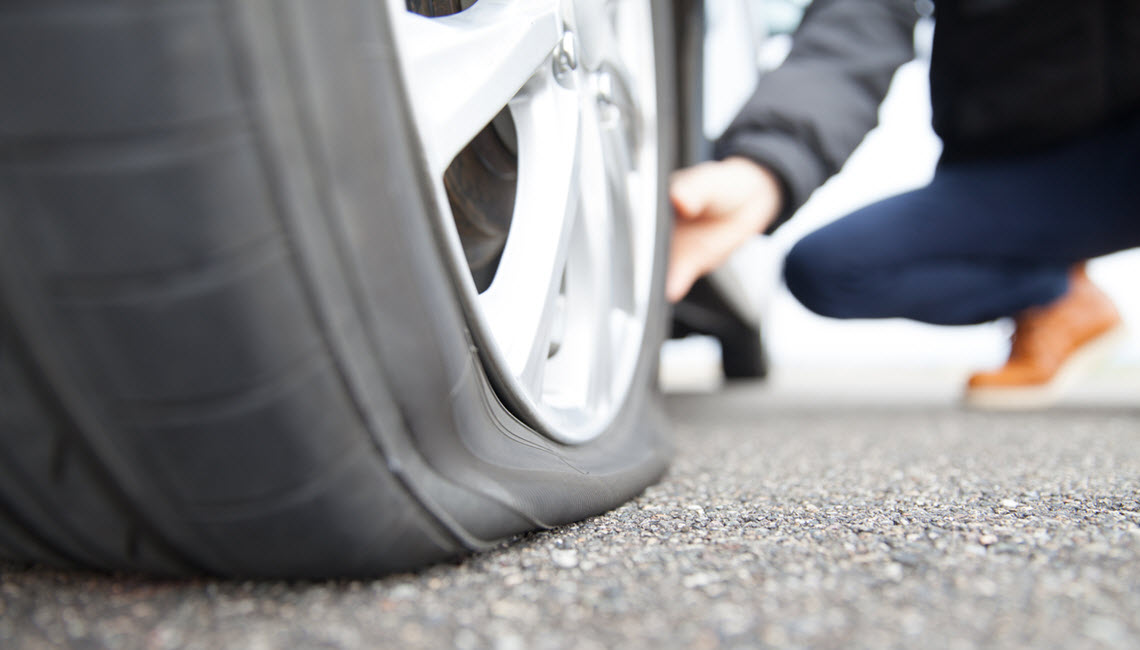
A flat tire can be a frustrating and inconvenient problem to deal with, and it can also be dangerous, especially if it occurs while driving at high speeds. Not only can a flat tire cause damage to your Jaguar, but it can also put your safety at risk, particularly if it happens on a busy road or in adverse weather conditions.
A tire is made up of several components, including the tread, sidewall, beads, plies, belts, and inner liner. The tread is the part that comes into contact with the road, and it is made up of a pattern of grooves and channels that provide grip and stability. The sidewall provides structural support and protection against impact damage. The beads are the parts of the tire that connect [...]
]]>
A flat tire can be a frustrating and inconvenient problem to deal with, and it can also be dangerous, especially if it occurs while driving at high speeds. Not only can a flat tire cause damage to your Jaguar, but it can also put your safety at risk, particularly if it happens on a busy road or in adverse weather conditions.
A tire is made up of several components, including the tread, sidewall, beads, plies, belts, and inner liner. The tread is the part that comes into contact with the road, and it is made up of a pattern of grooves and channels that provide grip and stability. The sidewall provides structural support and protection against impact damage. The beads are the parts of the tire that connect it to the wheel rim, while the plies and belts provide strength and stability to the tire’s structure. Finally, the inner liner is a layer of rubber that provides an airtight seal to keep the air inside the tire. Tires can go flat for several reasons, such as punctures from sharp objects, damage to the sidewall or bead, or a leak in the valve stem. Understanding the reasons why your Jaguar’s tire may go flat can help you take preventative measures and reduce the risk of experiencing a flat tire in the future.
Puncture
Punctures can be caused by various sharp objects, including nails, screws, and other debris on the road. When the tire is punctured, air begins to escape from the tire, causing it to go flat. The size and location of the puncture will determine whether the tire can be repaired or must be replaced entirely. Punctures can occur at any time and can happen to anyone, regardless of how carefully they drive.
Damaged Valve Stem
The valve stem is a small component that attaches to the tire’s rim and connects to the tire’s inner tube. The valve stem is responsible for holding air in the tire and allowing air to be added or removed as needed. If the valve stem is faulty, it can leak air out of the tire, resulting in a flat. Valve stems can become damaged due to exposure to dirt, dust, and debris or from over-tightening the valve cap.
Poor Tire Maintenance
Failure to perform regular tire maintenance can lead to flat tires. For example, tires that are not inflated to the recommended pressure are more likely to fail, as are tires that are not rotated regularly. Worn-out or damaged tires can also cause a flat tire, as can tires that are out of alignment or have uneven wear.
Weather Conditions
Extreme weather conditions can also cause flat tires. For example, driving over a pothole during the winter months when roads are icy can cause a tire to go flat. Similarly, driving over debris or uneven surfaces during heavy rain or snow can also lead to a puncture.
Aging Tires
Over time, tires can begin to deteriorate and lose their structural integrity. As tires age, they become more susceptible to punctures and leaks. If your Jaguar’s tires are several years old, it may be time to replace them.
Prevention of Flat Tires
- Regular Tire Maintenance: The best way to prevent flat tires is to practice regular tire maintenance. Check the tire pressure regularly and inflate the tires to the recommended pressure. Inspect the tires for any signs of damage or uneven wear, and replace them if necessary.
- Avoiding Road Hazards: Try to avoid driving over debris or potholes as much as possible. Be aware of construction sites and avoid them if possible. If you do have to drive over debris or a pothole, slow down as much as possible to minimize the impact.
- Proper Storage: When storing your Jaguar for long periods, make sure the tires are properly inflated and stored in a cool, dry place. This will help prevent dry rot, which can cause tires to crack and go flat.
- Tire Sealant: Consider using a tire sealant, which can help prevent punctures and slow leaks. Tire sealant can be injected into the tire through the valve stem and will seal any small leaks.
Book an Appointment at Glenwood Foreign Car Today
At Glenwood Foreign Car, we have experienced mechanics who 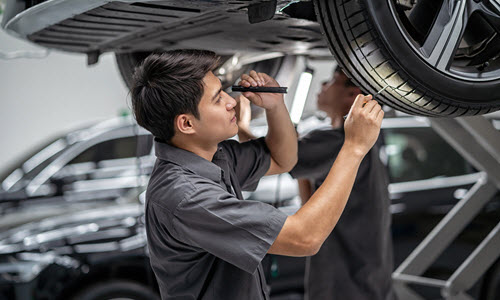 will help you maintain and fix tire issues in your Jaguar. We proudly serve Jaguar owners in Upper Makefield Township, Yardley, Newtown, and Morrisville, PA. Book an appointment with us now for any European car repair or maintenance!
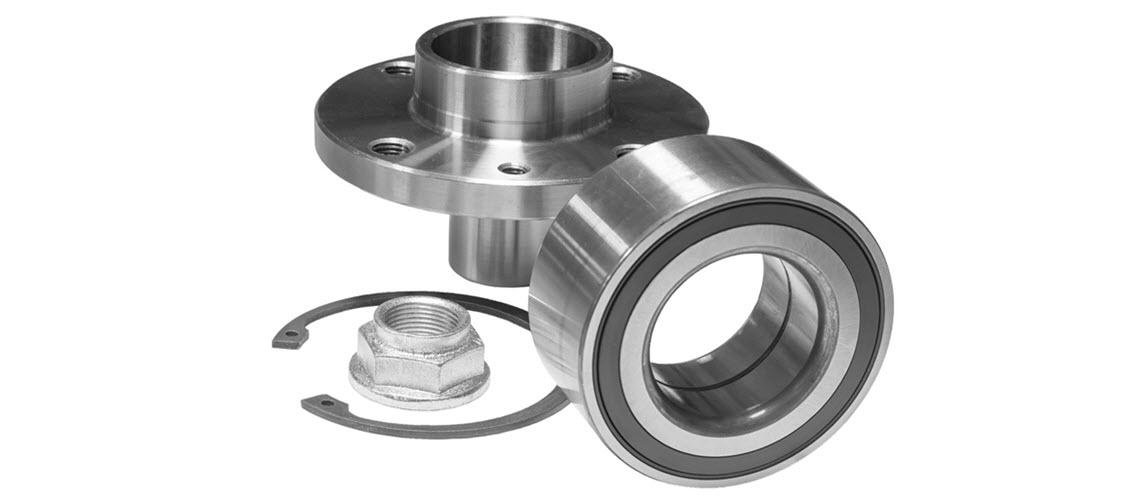
For your car to move, it needs its four wheels to function properly. The wheel bearing is at the center of your car’s wheels. This is a group of steel balls that are held together by a metal ring known as a race. The wheel bearings are tightly packed inside a piece of hollow metal known as a hub which holds the wheel bearings. The wheel bearings help to prevent friction.
The wheel bearings don’t require lubrication. This is why they are held tightly, so they are kept away from road dust and water. Though they are low maintenance, they can still run the risk of failure.
What can cause front wheel bearings to fail?- Faulty setup: Using inappropriate instruments, such as a wrench, might [...]
For your car to move, it needs its four wheels to function properly. The wheel bearing is at the center of your car’s wheels. This is a group of steel balls that are held together by a metal ring known as a race. The wheel bearings are tightly packed inside a piece of hollow metal known as a hub which holds the wheel bearings. The wheel bearings help to prevent friction.
The wheel bearings don’t require lubrication. This is why they are held tightly, so they are kept away from road dust and water. Though they are low maintenance, they can still run the risk of failure.
What can cause front wheel bearings to fail?
- Faulty setup: Using inappropriate instruments, such as a wrench, might impair the wheel end bearing (both the interior and exterior.) This can cause the wheel bearing to fail prematurely. Reusing old fittings like seals, bolts, split pins, etc. rather than changing them for new ones can make the wheel end bearing function under abnormal and unsafe conditions.
- Impact: Any impact such as hitting a pothole or the curbstone, speed bumps can ruin a wheel bearing and shorten its lifespan. Potholes can create a fracture in the wheel and housing, so be cautious of hazardous road conditions.
- A wheel bearing is constantly under great pressure: Poor heat treatment can cause early wear and also a failure in wheel bearings made of low-quality materials.
- Driving Conditions: Your wheel bearings can fail if you drive through dirt or deep water. Mud, water, or other contaminants like dust could get through the seals and into the bearing, contaminating the oil and causing the bearings to wear out.
- Inappropriate modifications: Fitting larger rims, firmer shock absorbers, and suspension springs to a vehicle increase the pressure on the wheel bearing, which can hasten to wear. To reduce the impact on the wheel bearing, stick to rims, shock absorbers, tires, and springs manufactured by Jaguar.
Signs of Wheel Bearing Failure
- Listen for Unusual Noises: While driving, if you hear a grinding sound emanating from your car wheels, it is most likely because of a faulty wheel bearing. This sound could especially get louder with acceleration. Also, when your tires collide with road debris or strike a pothole while driving, the sound may differ from what you’re used to hearing. The front wheel bearing noise is much easier to detect while steering your vehicle from side to side slowly.
- Loose steering wheel: If you are driving your Jaguar and find your steering wheel less precise or less responsive than usual, it can be an indicator of wheel bearing failure. The wheel bearing can get worn down, causing them to loosen up in your wheel assembly.
- Uneven wear: Extremely uneven wear on your tire may also be a culprit of a failing wheel bearing.
How to Distinguish Wheel Bearing Sounds from Other Noises
You know how your Jaguar sounds, from the purring of engine noise, to the low idle. If you notice something new, trust your instincts and have it checked out:
- Humming: Humming sounds are typical of tire issues, although they can be caused by several other issues.
- Growling and Squealing: If you hear a sound while driving your Jaguar that changes in proportion to your vehicle speed, it may be related to a wheel bearing issue. The sound can also change with every turn.
- Howling: Overly worn bearings, on the other hand, generate a howling noise when they don’t support the gears When they turn, they also generate a rumbling sound.
Expert Repair of Your Jaguar at Glenwood Foreign Car
Overall, it’s not safe to drive with a bad wheel bearing; it’s 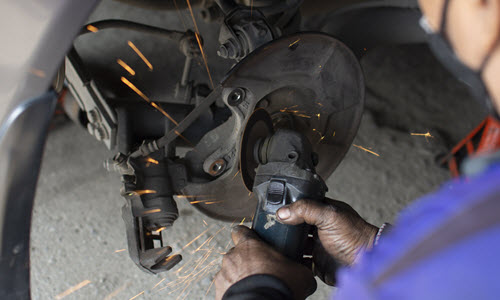 actually very dangerous. It could cause the wheel to stop as you are driving. A bad wheel bearing could also cause your tires to wear out quicker, and the wheel can even fall off in the worst case scenario. The bearing is important to keep your wheel attached to the vehicle.
At Glenwood Foreign Car, we are experienced with the maintenance of all Jaguar models. Our certified mechanics are qualified to diagnose and find quick solutions for your Jaguar. Our shop is conveniently located on the corner of Trenton Avenue in Upper Makefield Township, and we proudly serve customers in the area from Morrisville, PA, too. Call us today to schedule an appointment or speak with a mechanic concerning issues you are experiencing!
]]>
Coolant reservoir failure is one of the most common car issues that a Jaguar faces. The coolant reservoir is a component in your car that holds the coolant that is needed by your car to operate at the appropriate temperature and to provide you optimal results. It also helps to prevent overheating and other issues that have to do with poor temperature in your car. If your engine overheats, it can cause major issues and leave you stranded if it won’t start again.
Symptoms of a Coolant Reservoir Failure in your JaguarWhen your Jaguar is about to develop a fault with the coolant reservoir, it would show you some or all of these signs. These would help you to quickly detect this fault and attend to [...]
]]>
Coolant reservoir failure is one of the most common car issues that a Jaguar faces. The coolant reservoir is a component in your car that holds the coolant that is needed by your car to operate at the appropriate temperature and to provide you optimal results. It also helps to prevent overheating and other issues that have to do with poor temperature in your car. If your engine overheats, it can cause major issues and leave you stranded if it won’t start again.
Symptoms of a Coolant Reservoir Failure in your Jaguar
When your Jaguar is about to develop a fault with the coolant reservoir, it would show you some or all of these signs. These would help you to quickly detect this fault and attend to it in the soonest time possible. They include:
Overheating
This is the most common and the most easily noticeable sign that your Jaguar points out to you if it is about to or is already experiencing a coolant reservoir failure. The engine starts to heat up and affect various cooling components in your car, but mostly the coolant reservoir.
Leakage
The leakage of coolant in your car is a vital symptom that you should pay attention to. When the coolant in your car begins to leak, it could alert you in any of these different ways: If you notice a nice smelling and sweet odor in your car, that is different from the air freshener you put in it, it is the coolant that is beginning to leak. Coolants have enticing odors. This becomes even more detectable when you drive because the coolant is in use at the time. Hence, intensifying the odor.
Also, if you notice a rapid increase in how many times you have to refill your coolant reservoir, there might be a coolant leakage going on somewhere. Take time to notice when and how often you refill or replace your coolant to easily detect a coolant reservoir issue and treat it as soon as possible.
Coloured Oil Leakages
If after you have parked your car, you notice oil leakages that have bright colors like red, blue, yellow, green, pink, orange, etc. under your car, it is likely that coolant is leaking. When you notice this colored leakage or spillage under your car, you should check it and attend to the issue very rapidly. It might be a coolant reservoir system issue.
Causes of a Coolant Reservoir Failure in your Jaguar
The following two may be factors that contribute to a fault in the function of your coolant reservoir.
- Natural Wear Overtime: It is normal to have parts of a machine fail after they have been used for a long period. When you have had your Jaguar for quite a long time and have used it very often, its components can develop faults and there could be a deterioration in the general function of your car. The coolant reservoir is one component that could be easily affected. When this happens, your car’s coolant reservoir needs a replacement.
- Heat: Overheating is a major feature and cause of a coolant reservoir failure that could happen in your Jaguar. This is a result of the leakage of coolant from the reservoir into the engine, increasing the heat that is generated by the car. This could cause a crack or major wear in the coolant reservoir tank and by extension, cause a coolant reservoir issue.
How to Handle a Coolant Reservoir Failure
Usually, fixing a coolant reservoir failure is a delicate task 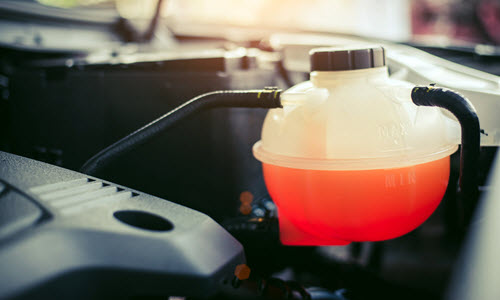 and requires expertise so as not to develop other problems. The best option, most of the time, is to replace the car’s coolant reservoir.
At Glenwood Foreign Car, we understand the proper treatment that your Jaguar needs when it encounters this issue. Our experienced engineers are not only skilled but also equipped to carefully attend to the needs of your car.
Since 1977, we have earned the trust of car owners in Makefield Township, Yardley, Newtown, Morrisville, and PA such that we have now become your one-stop shop for car services. Call in or visit any of our centers to book an appointment!
]]>
Jaguars are held to a much higher standard among drivers than many other vehicles because of their high-performance engine and luxurious comforts. While they are manufactured using the highest quality parts available, even these exceptional vehicles are subject to part failure. Below you will learn more about the function of the thermostat and what to do should you experience thermostat failure in your Jaguar.
All vehicles are designed and manufactured with a thermostat. The thermostat is designed to regulate the flow of coolant through the engine, which is an essential part of the functionality of your Jaguar. When coolant is unable to flow through your vehicle properly, the engine itself is negatively affected.
The thermostat is designed with several moving parts, including a metal rod that allows [...]
]]>
Jaguars are held to a much higher standard among drivers than many other vehicles because of their high-performance engine and luxurious comforts. While they are manufactured using the highest quality parts available, even these exceptional vehicles are subject to part failure. Below you will learn more about the function of the thermostat and what to do should you experience thermostat failure in your Jaguar.
All vehicles are designed and manufactured with a thermostat. The thermostat is designed to regulate the flow of coolant through the engine, which is an essential part of the functionality of your Jaguar. When coolant is unable to flow through your vehicle properly, the engine itself is negatively affected.
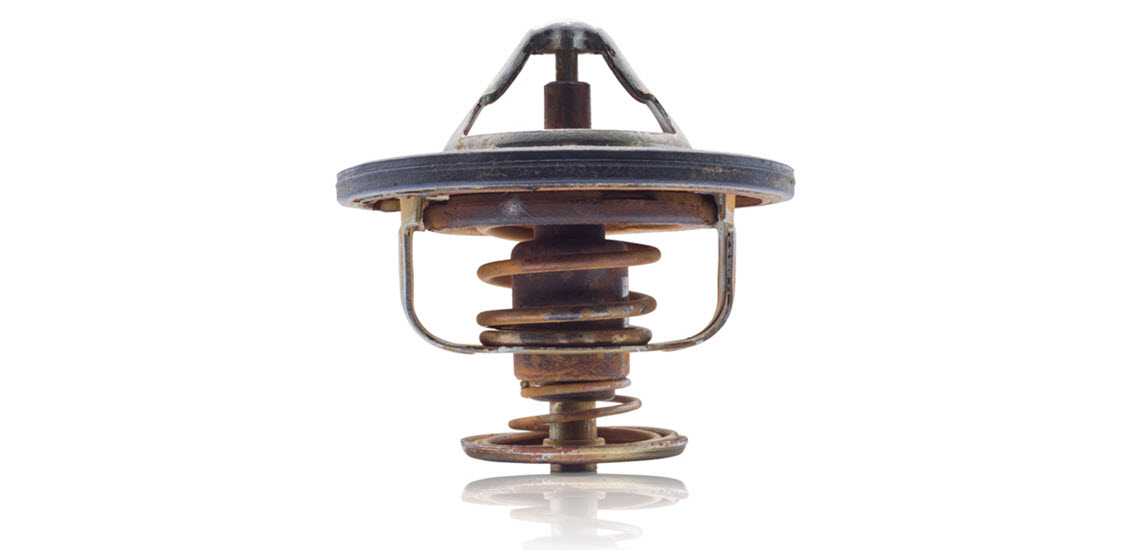
The thermostat is designed with several moving parts, including a metal rod that allows the thermostat to open and close when needed. When the engine is cool, the metal rod keeps the thermostat closed so that coolant is unable to flow. However, when the engine begins heating up, the metal rod allows the thermostat to open, allowing coolant to flow freely to keep the engine at a cool temperature.
Warning Signs and Symptoms of Thermostat Failure
There are several warning signs that have been reported to alert drivers to an arising problem with their vehicle. It is important that drivers do not ignore these signs and symptoms and have their vehicle inspected immediately by an expert mechanic.
Engine overheating
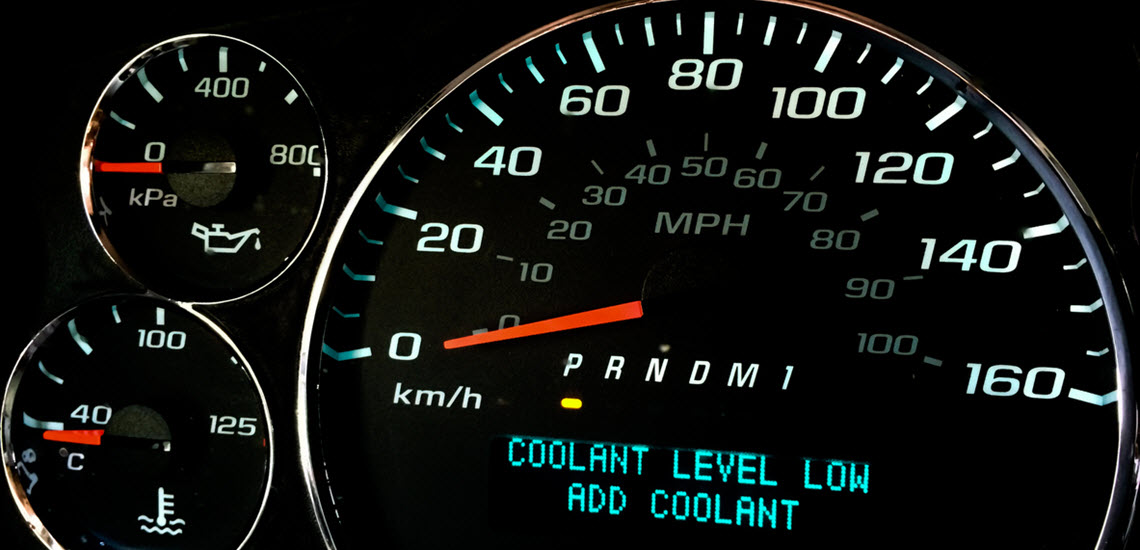
Jaguars are equipped with a temperature gauge on the dashboard that allows drivers to monitor the heat of their vehicle’s engine. The needle on the gauge will move up, down, or stay in the middle to indicate whether the engine is too cold, too hot, or just right.
When the rod that allows the thermostat to open and close becomes corroded, the thermostat is unable to open properly. When this occurs, coolant cannot flow through the engine as needed, leaving the engine subject to overheating. An overheating engine that is left untreated can lead to complete engine failure.
Erratic temperature changes
When the thermostat fails and the coolant is not able to flow or stop flowing as needed, the temperature gauge on the dashboard will move around erratically. This is a tell-tell sign that there is something not right beneath the hood of your Jaguar.
Coolant leak
When coolant begins leaking from your vehicle, your first stop should be inspecting the thermostat. When the thermostat begins to fail or break down, the coolant is no longer held where it should be. Depending on the formula of the coolant used, you may notice green, yellow, pink, red, or even blue fluid leaking from your vehicle.
It is extremely important that you do not ignore any warning sign from your vehicle if there is a problem beneath the hood. Ignoring a coolant leak or failing temperature gauge can lead to catastrophic engine failure.
What causes a thermostat to fail?
Due to the location of the thermostat in comparison to the engine, it is constantly exposed to extremely hot temperatures as well as corrosive substances. Over time, the extreme heat leaves the thermostat unable to function properly, causes it to break down, or even breaks down parts surrounding it, leaving it unable to open and close properly.
Routine maintenance appointments can help drivers become more aware of their vehicle and what seems to be going on beneath the hood.
Glenwood Foreign Car
Glenwood Foreign Car is conveniently located in Yardley, PA. We have 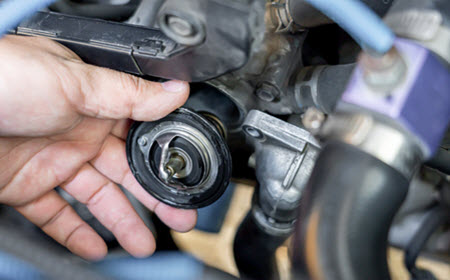 been helping customers of Yardley and the surrounding areas since 1977, including Upper Makefield Township, Newtown, and Morrisville, PA.
We are an auto service center specializing in the service and repair work of foreign cars, such as Audi, BMW, Jaguar, Land Rover, Mercedes-Benz, MINI, Porsche, Smart, Volkswagen, and Volvo.
Glenwood Foreign Car is a BOSCH Certified Service Center. We provide customers with factory-grade service at an affordable cost. Our team is proud to offer our loyal customers loaner cars, available upon request, and a BOSCH service credit financing option. This financing option is a great option, as it offers an easy application process, no annual fees, and low monthly payments. Our team of highly trained professionals is here to help with all of your foreign car needs, so give us call today!
]]>
A problem that can occur with Jaguars is a coolant leak. Usually coming from your car’s undercarriage, coolant leaks should never be ignored. This type of leak indicates a major problem in your engine and should be addressed quickly to avoid overheating and potential engine damage.
Also known as antifreeze, coolant is typically brightly colored, usually green or pink, and has an almost sweet aroma. Along with a few additives, coolant is basically glycol-based with additives and distilled water. Its main function is to cool down your Jaguar’s engine. It does this by absorbing the heat that circulated through the engine system, whereafter it passes through the radiator, where it is cooled off so it can repeat the process.
Coolant Leak ProblemWhen first noticing a leak, you should [...]
]]>
A problem that can occur with Jaguars is a coolant leak. Usually coming from your car’s undercarriage, coolant leaks should never be ignored. This type of leak indicates a major problem in your engine and should be addressed quickly to avoid overheating and potential engine damage.
Also known as antifreeze, coolant is typically brightly colored, usually green or pink, and has an almost sweet aroma. Along with a few additives, coolant is basically glycol-based with additives and distilled water. Its main function is to cool down your Jaguar’s engine. It does this by absorbing the heat that circulated through the engine system, whereafter it passes through the radiator, where it is cooled off so it can repeat the process.
Coolant Leak Problem
When first noticing a leak, you should initially try to figure out if your car is leaking coolant or if it’s a different liquid or substance. As with any car, your Jaguar features many liquids that could be leaking.
To find out what substance is leaking, you can place a piece of paper under your car and let it sit there for a few hours. You can then take a look at what leaked, paying special attention to its smell and color. This will help you discern whether it is coolant leaking or something else like gas or oil.
Reasons for a Coolant Leak
After discovering that coolant is leaking from your Jaguar, you can next try to figure out the cause of the leak. There are two primary reasons that coolant leaks happen:
- Radiator Issues: Holes or cracks in the radiator can often cause leaks, as they allow the coolant to seep out of the radiator system. The radiator itself is a highly important aspect of the coolant system, since the hot coolant that has circulated from the engine cools itself down inside the radiator before it recirculates. The radiator also plays an important role in the pressure maintenance in the engine. Additionally, the coolant’s temperature will not stay consistent the way it should without the radiator. This could result in overheating. Even the smallest of bumps or cracks in the radiator can cause serious problems.
- Head Gasket Problems: Most typically, coolant leaks are caused by faulty or failing head gaskets. The head gasket’s function is to make the coolant system a closed circuit, leveling the pressure and stopping coolant from going where it shouldn’t. With a damaged or defective head gasket, the coolant could escape the system, entering places like the cylinders or crankcase, where it can mix with engine oil. In turn, this can often cause damage to the engine itself. If the coolant reaches spark plugs, it will burn and emit white smoke coming from the exhaus The head gasket can malfunction for many reasons, but it is commonly because of consistent overheating of the engine.
Though these issues can be difficult to find, a trained mechanic should have no problem diagnosing and fixing your coolant leak’s cause. That’s where we come in.
Glenwood Foreign Car for Your Jaguar
Glenwood Foregin Car in Yardley, Pennsylvania is a premier foreign car repair shop ready to help your Jaguar get back to its best shape. Located off of Woolston Drive, 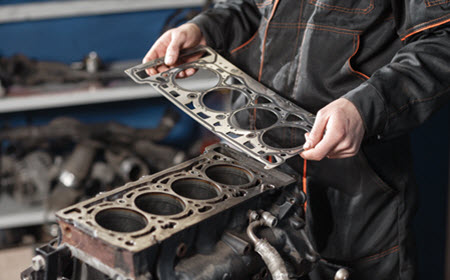 Glenwood Foreign Car services the entire Yardley area including Upper Makefield Township, Newtown, and Morrisville, PA.
We take pride in hiring the best-trained mechanics for the job and guarantee that we can diagnose and repair your Jaguar’s problem quickly and more cost-effectively than the dealership. Here you’ll find the most comprehensive services and repairs on the market, with quality customer service to match.
In addition to repairing either the radiator or the head gasket that is causing your coolant leak, Glenwood Foreign Car offers the following services for your prized Jaguar:
- Brake repairs
- Check engine light diagnosis
- Electrical system services
- Engine repairs and rebuilding
- Transmission maintenance
If you find your car leaking a sweet-smelling, colorful liquid, then you have a major problem on your hands. Ensure that your Jaguar won’t develop any more serious problems due to a coolant leak by taking your vehicle in to Glenwood Foreign Car today.
]]>
Jaguar vehicles have been designed with superb performance and recognizable style in mind. To remain in their optimal condition, special care and routine maintenance have to be administered to your Jaguar.
Even with this rigorous care, there will be parts that unexpectedly fail. One such component is the timing chain tensioner. Keep reading to find out more about what the function of the timing chain tensioner, the signs to look for if it has failed, and how to deal with the failure.
The Function of the Timing Chain TensionerBefore describing the function of the timing chain tensioner, the timing belt has to be explained.
The timing belt is responsible for synchronizing the timing between the opening and closing of the engine valves, specifically the camshaft and crankshaft.
These [...]
]]>
Jaguar vehicles have been designed with superb performance and recognizable style in mind. To remain in their optimal condition, special care and routine maintenance have to be administered to your Jaguar.
Even with this rigorous care, there will be parts that unexpectedly fail. One such component is the timing chain tensioner. Keep reading to find out more about what the function of the timing chain tensioner, the signs to look for if it has failed, and how to deal with the failure.
The Function of the Timing Chain Tensioner
Before describing the function of the timing chain tensioner, the timing belt has to be explained.
The timing belt is responsible for synchronizing the timing between the opening and closing of the engine valves, specifically the camshaft and crankshaft.
These valves have to be timed perfectly to ensure that the fuel injections are accurate and that the byproducts of combustion are released. Some Jaguars will have a timing belt and some will have a timing chain. Either way, they perform in the same way.
The timing chain tensioner is responsible for putting the appropriate pressure or tension onto the timing chain so it can be properly controlled. This successfully synchronizes the engine valves.
Depending on the model of Jaguar you drive, the timing chain tensioner will apply the required tension through either spring tension or hydraulic pressure. When this system begins to fail, the synchrony between engine valves is not maintained, leading to engine malfunctions.
Signs of Timing Chain Tensioner Failure
The first sign of failure of the timing chain tensioner is rattling coming from under the hood. When the timing chain tensioner starts to fail, it will produce a decreased amount of pressure. This pressure is what is required to keep the timing chain in place. Without it, the timing chain comes loose.
Once this happens, the timing chain starts to rattle as it circulates because it is no longer secured in place. The rattling is the sound of the timing chain hitting other pieces of metal. This leads to deterioration of the timing chain and the parts in the engine that surround it.
Another sign to be aware of if the timing chain tensioner has failed is the engine of your Jaguar failing to turn over. As previously noted, the timing belt controls the camshaft and crankshaft which are responsible for help with starting the engine. When synchronization of these valves does not happen, the combustion of the fuel to air mix cannot occur, leading to a no-start condition of your Jaguar.
One last sign that indicates timing chain failure is an engine misfire. If the tensioner is not providing the necessary pressure, the timing chain cannot provide synchronization. This will cause premature combustion.
Premature combustion leads to engine misfires, because the combustion occurs sooner than the engine required. So instead of putting this combustion to use, it disrupts the process and causes misfires.
How to Deal With Timing Chain Tensioner Failure
Now that you know what signs to look for that indicated timing chain tensioner failure, it is time to address the issue. In a majority of cases, the only way to ensure that you no longer have issues with the timing chain tensioner is by having the system replaced. The timing chain should also be replaced because it has most likely suffered damage due to the timing chain tensioner.
When replacing these parts, the parts around the system also need to be inspected for damage. For example, the water pump is attached to the timing chain, so you will want to make sure no damage has occurred to that system as well.
Trust Glenwood Foreign Car for Timing Chain Tensioner Repairs
As you can see, there are plenty of parts 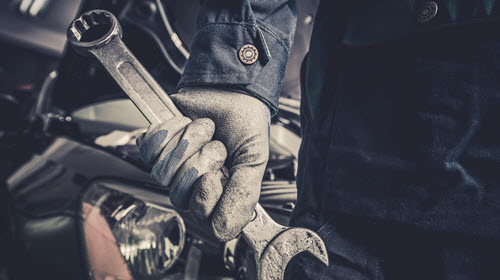 that need to be inspected and potentially replaced when the timing chain tensioner fails in your Jaguar. To ensure that the repairs are done correctly, the best place to take your Jaguar is Glenwood Foreign Car.
We are easily accessible from the areas of Upper Makefield Township, Yardley, Newtown, and Morrisville, PA. When you bring your Jaguar into us at your scheduled appointment time, one of our trained and certified technicians will perform a thorough diagnostic and inspection of your vehicle. Once they properly identify the parts that need replacing, high-quality parts are used in the replacement. You and your Jaguar will be back on the road in no time with a brand new timing chain tensioner.
]]>
Jaguar is known for combining a rebellious lust for adventure with amazing, high-performance vehicles. Hitting the road in a Jaguar is nothing more than thrilling and fun, not to mention how the advanced handling and technology makes you feel like you are one with your car.
However, all these amazing features and benefits of driving a Jag do not come for free. To continue this exceptional driving experience, you need to make sure you stay on top of your maintenance and servicing record. This will prevent sudden part failure and ensure you get the very best out of your vehicle.
One such part that you should pay particular attention to is the ABS accumulator. Let’s take a look at this vital part and learn some tips and tricks [...]
]]>
Jaguar is known for combining a rebellious lust for adventure with amazing, high-performance vehicles. Hitting the road in a Jaguar is nothing more than thrilling and fun, not to mention how the advanced handling and technology makes you feel like you are one with your car.
However, all these amazing features and benefits of driving a Jag do not come for free. To continue this exceptional driving experience, you need to make sure you stay on top of your maintenance and servicing record. This will prevent sudden part failure and ensure you get the very best out of your vehicle.
One such part that you should pay particular attention to is the ABS accumulator. Let’s take a look at this vital part and learn some tips and tricks to identify failure.
The ABS Accumulator
The ABS accumulator is an innovation which makes your brakes far smoother and safer. As you drive, the ABS accumulator collects or accumulates hydraulic pressure. This can be tapped into when needed during a potential emergency situation, such as an animal running in front of your car or another vehicle in front of you suddenly braking.
The accumulator collects the power from the electric pump, which is found within the braking system. It is commonly composed of nitrogen. The ABS accumulator is able to build pressure by using a diaphragm, which separates the nitrogen from the hydraulic fluid. The diaphragm depresses and creates pressure to be used by the accumulator.
The fact that the ABS accumulator works to make your brakes safer means that it is an important safety system of your Jaguar. It is responsible for giving your brakes an immediate increase in pressure without requiring the more delayed response of the electric pump. This is essential in times when emergency braking is required, such as to avoid an accident or when driving in adverse weather conditions.
Without a working ABS accumulator your Jaguar is forced to rely solely on the pressure created by the electrical pump, which is often less powerful and more sluggish, leaving you exposed to dangerous situations.
Why ABS Accumulator Failure Happens
There are two key reasons why ABS accumulators fail. Either the diaphragm fails or the nitrogen reduces in pressure. The diaphragm is essential to separate the hydraulic fluid and the nitrogen, which is essential to the function of the ABS. Therefore, if the diaphragm has become worn or isn’t working correctly, then you can expect a steep drop in the overall function of the ABS accumulator.
The diaphragm is made from rubber. Over time, it will naturally start to break down and degrade. The seal between the nitrogen gas and the hydraulic fluid may no longer be effective, since the two can mix. This will prevent the ABS accumulator from storing much pressure, if any pressure at all.
Low pressure within the nitrogen can also result in ABS failure. It is the compression of the nitrogen which creates pressure within the hydraulic fluid. So, when nitrogen pressure is low, the resulting hydraulic pressure will also be low. This will mean your ABS accumulator performs with minimal effectiveness, and the safety of your brakes is reduced.
How to Tell if your Jaguar Experiences ABS Failure
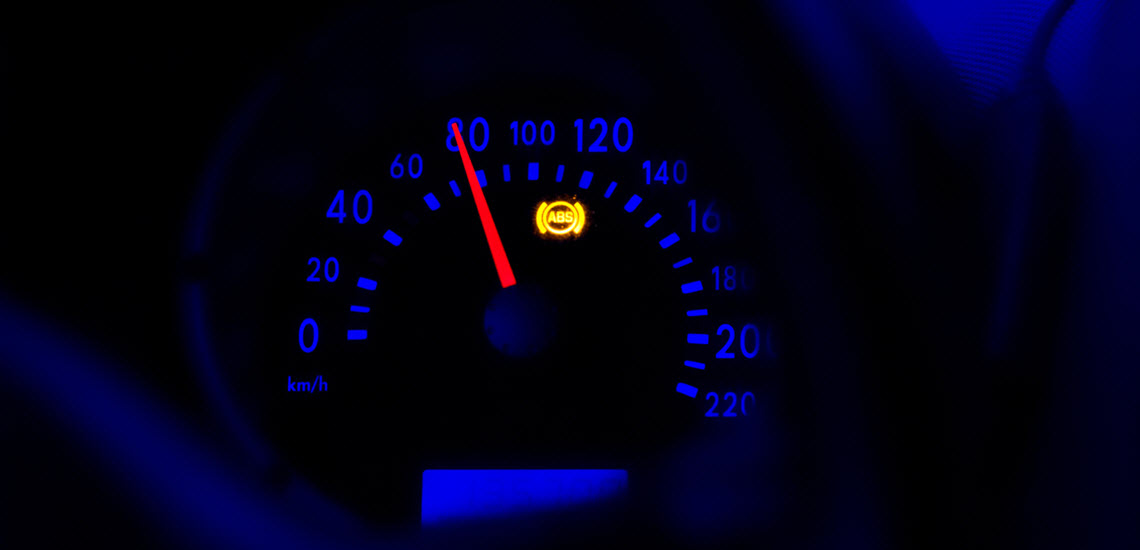
A failing ABS accumulator tends to be quite easy to 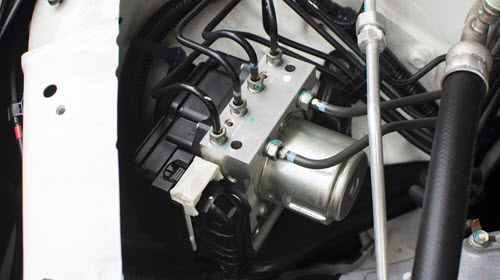 notice due to the negative side effects your Jaguar will start to experience. When your Jaguar has a working ABS accumulator, you’ll notice that when pressure is applied to the brakes, there will be a firm resistance that follows as the accumulator releases its pressure. In the case of a Jaguar, with ABS failure, however, once the pedal is pressed, the pressure will be released quickly and with little-to-no resistance. This can be a scary thing to experience, as your Jaguar will feel out of control and may start to skid.
Glenwood Foreign Car
Don’t let a failing ABS accumulator put you or those around you at risk. At the first sign of problem, call our team at Glenwood Foreign Car. We proudly serve the residents of the Upper Makefield Township, Yardley, Newtown, and Morrisville, PA communities and are your local Jaguar experts. Call us today for help with your ABS accumulator problem and for all your Jaguar maintenance and repair services.
]]>
Jaguars are one of the most powerful and reliable luxury vehicles on the road today, but as with any car, they have their own share of common maintenance issues. With the help of a trained specialist, you can head off these problems and fix any potential issues that arise over the life of your Jag. One problem that Jaguar owners tend to experience with normal wear and tear is ABS accumulator failure. With the assistance of professional mechanics, this and any other mechanical failures can be avoided through regular care maintenance. In this article, we will briefly discuss what this crucial component does, when it needs to be replaced, and where you should bring your Jaguar for service in Morrisville.
What is an ABS accumulator?Many of the [...]
]]>
Jaguars are one of the most powerful and reliable luxury vehicles on the road today, but as with any car, they have their own share of common maintenance issues. With the help of a trained specialist, you can head off these problems and fix any potential issues that arise over the life of your Jag. One problem that Jaguar owners tend to experience with normal wear and tear is ABS accumulator failure. With the assistance of professional mechanics, this and any other mechanical failures can be avoided through regular care maintenance. In this article, we will briefly discuss what this crucial component does, when it needs to be replaced, and where you should bring your Jaguar for service in Morrisville.
What is an ABS accumulator?
Many of the systems of an automobile utilize hydraulic fluids under pressure in order to accomplish their intended purposes. The braking system is one example of a hydraulic system. Your Jaguar features an anti-lock braking system (ABS). This prevents the brakes from seizing, which can be very dangerous. Older vehicles tend to experience this hazard, so modern cars have ABS installed to prevent accidents as a result of brake failures.
The hydraulic pressure necessary for the functioning of ABS is built up in the ABS accumulator, where it is stored while the brakes are not in use. This built up pressure is then released from the accumulator to the braking mechanism when you depress your Jaguar’s brake pedal. If the ABS Accumulator fails and hydraulic pressure is not accumulated, then you will encounter a malfunction in your brakes.
How to Know When the Accumulator is Broken
The surest symptom of a failing ABS accumulator is a change in the behavior of the brake pedal. Normally, when you start your car, you can feel the built up pressure in the brake lines being released as you depress the pedal. If you start your Jaguar and feel a change in your brake pedal’s responsiveness when attempting to put it in gear, you should immediately consider bringing your car to a qualified technician to be serviced. If this happens to you suddenly while on the road, it can be very dangerous, and you should pull over just to be safe.
The ABS accumulator is a sophisticated part of your Jaguar, with multiple interconnected components that all need to be functioning properly for the accumulator to work. If the accumulator chamber ruptures, it won’t be able to hold pressure. Alternatively, if it totally fills with hydraulic fluid, then pressurized air cannot accumulate, rendering the part useless. To replace a faulty accumulator on your Jaguar, amateur service simply do. These are highly complex machines, and a professional, certified technician is required to properly diagnose and repair issues on with your vehicle.
Glenwood Foreign Car is Morrisville’s Best in Jaguar Service
Glenwood Foreign Car service center has been in business for over 40 years. We use the latest technology and diagnostic tools, and we are partnered with Bosch, a world-renowned auto parts manufacturer.
Your first instinct may be to take your Jaguar to a dealership, but let’s face it. All too often, they are a hassle and their prices are way too high. At Glenwood Foreign Car, you’ll 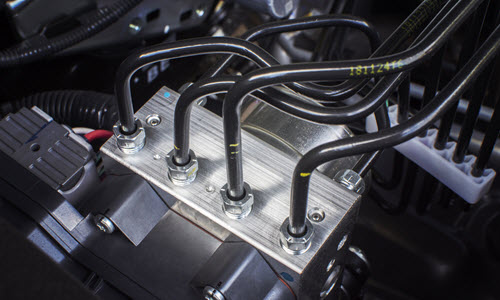 get better than dealership-quality service without the inflated dealership prices. Rather than having to pay an arm and a leg for routine services, or having to wait days for your car to be ready, come see us.
The benefit of an independent auto shop like Glenwood is that you get the personalized, professional touch of seasoned technicians who know their trade inside and out. We are conveniently located just off of US Route 1, in Morrisville, and our customers regularly give us 5-star reviews on Google, Facebook, and Yelp.
Our certified mechanics are experienced and offer superior quality maintenance and repairs to Jaguar owners from throughout Upper Makefield Township, Yardley, Newtown, and Morrisville, PA. Whether you are looking to have your ABS accumulator replaced, or you need a professional to take a look under the hood of your Jaguar, stop by today or give us a call at (215)-736-8888 to inquire about our amazing service. We look forward to your visit and to earning your trust and patronage for years to come.
]]>
Every vehicle you will own in your life requires strict maintenance to function properly. If even one part goes unchecked, a domino effect could take place, damaging all other parts until the car breaks down entirely. This is especially true of Jaguar vehicles, because they are far more delicate than your average domestic brand.
One of the most vital parts of your car is the engine thermostat. It regulates the temperature of the engine by allowing coolant to flow through at the proper times. Without it, your Jaguar will overheat and eventually damage the engine.
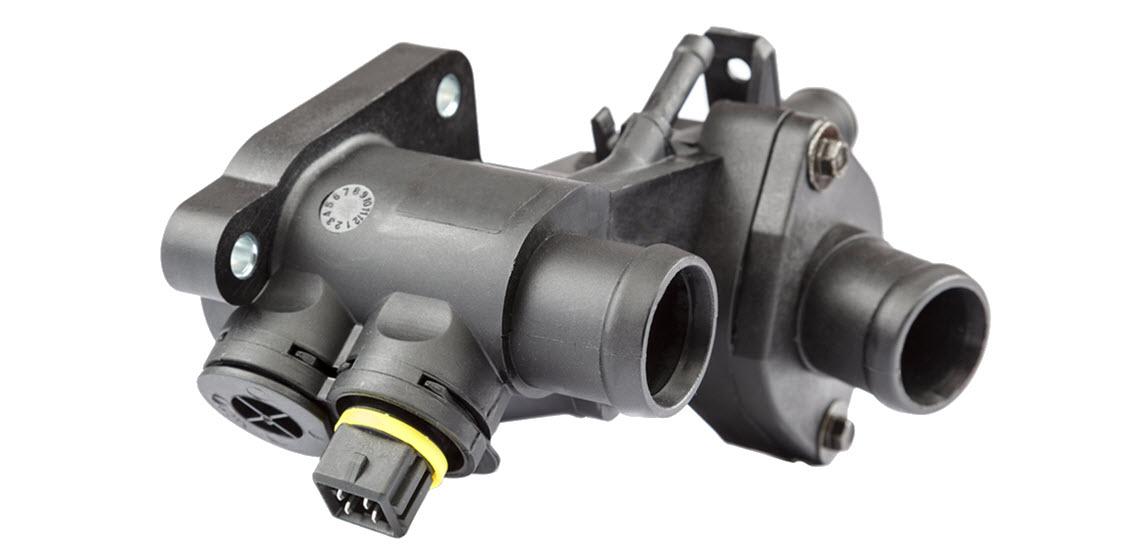
That is where the thermostat housing comes in. The housing protects the thermostat itself from becoming damaged, and it provides a way for the coolant to flow into the radiator.
To avoid total failure [...]
]]>
Every vehicle you will own in your life requires strict maintenance to function properly. If even one part goes unchecked, a domino effect could take place, damaging all other parts until the car breaks down entirely. This is especially true of Jaguar vehicles, because they are far more delicate than your average domestic brand.
One of the most vital parts of your car is the engine thermostat. It regulates the temperature of the engine by allowing coolant to flow through at the proper times. Without it, your Jaguar will overheat and eventually damage the engine.
That is where the thermostat housing comes in. The housing protects the thermostat itself from becoming damaged, and it provides a way for the coolant to flow into the radiator.
To avoid total failure of your Jaguar vehicle due to overheating, you will need to learn to recognize when the thermostat housing may be failing, what you can do about repairs, and how you can maintain it in the future.
Warning Signs of Failing Thermostat Housing
When the thermostat housing breaks, you will notice some pretty clear symptoms that indicate that you should take your Jaguar in to be inspected and repaired:
The coolant leak
This is one of the first signs that your thermostat housing has failed. This part is what helps the coolant flow through your engine. If you see a puddle underneath your vehicle or liquid dripping from underneath the car itself, you should inspect it. If the liquid is blue, green, red, amber, pink, yellow, or orange, it could be coolant. It will smell sweet. Gasoline is strong and acrid; you will likely be able to distinguish between the two easily.
Your engine is overheating
Without coolant, your engine can’t maintain its optimal temperature. It will begin to overheat, which will eventually damage the engine beyond repair. You should keep an eye on your temperature gauge. If the needle consistently rises while you drive without hitting a plateau and leveling out, you may have an issue with the thermostat housing and even the thermostat itself.
How to Maintain Engine Thermostat Housing in the Future
If your thermostat housing is already broken, there is nothing you can do but get it repaired in the meantime. In the future, however, there are a few things you can do to cut down on the likelihood of your Jaguar vehicle overheating:
- Have your car regularly inspected. It is important to make regular stops at an auto shop for check ups. A qualified professional will be able to spot things that you may not have noticed yet. They can help you fix it before the problem gets worse.
- Talk to your mechanic about replacing an old standalone thermostat housing with an integrated part instead. In older Jaguar vehicles, the housing and the thermostat were kept separate, so it made repairs more difficult. With an integrated unit, you save time and money. Your mechanic will be able to take it all out in one piece instead of spending extra time replacing them individually.
Where to Go for Repairs
If your thermostat housing is already in disrepair, the latter tips only help you later. 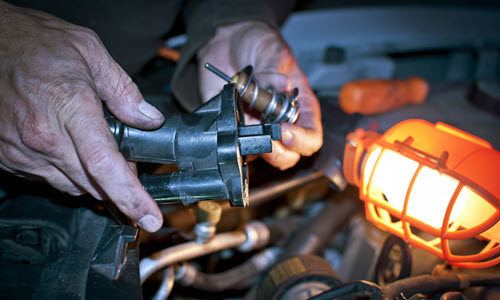 For now, you need to get yourself and your Jaguar vehicle over to someone who can help. Not everyone is prepared to deal with a foreign car such as yours. If you want to be able to trust your technician to repair the issue properly the first time, you need to see someone who specializes in working on Jaguars.
That is why you should stop by and let the qualified technicians at Glenwood Foreign Car help you. We have been in business for over 40 years. That is a lot of experience that our competitors don’t have. Some may worry that older shops only use old techniques, but we don’t. We use the latest technology and devices to help diagnose and fix any issues that may arise. You get the best of both worlds by trusting more experienced people with the best and newest tech available.
If you are in need of help in the following areas of PA, come by for repairs as soon as you can:
- Upper Makefield Township
- Yardley
- Newtown
- Morrisville
Every year, many people looking to purchase a luxury car end up with a Jaguar. Introduced in the United Kingdom in 1935, Jaguar is a British multinational car manufacturer known for sleek, sophisticated, high-end vehicles. Additionally, Jaguars are admired for being safe, reliable, luxurious, and fast, and the brand offers a wide range of cars, from SUVs to coupés to convertibles, guaranteeing there is a model to fit everyone’s needs.
No matter how high-end the vehicle, every brand has a few common issues that regularly pop up. Considering how important our cars are, both in terms of getting us where we need to be and in being typically one of our most expensive and prized possessions, it is a good idea to be aware of common problem areas in [...]
]]>
Every year, many people looking to purchase a luxury car end up with a Jaguar. Introduced in the United Kingdom in 1935, Jaguar is a British multinational car manufacturer known for sleek, sophisticated, high-end vehicles. Additionally, Jaguars are admired for being safe, reliable, luxurious, and fast, and the brand offers a wide range of cars, from SUVs to coupés to convertibles, guaranteeing there is a model to fit everyone’s needs.
No matter how high-end the vehicle, every brand has a few common issues that regularly pop up. Considering how important our cars are, both in terms of getting us where we need to be and in being typically one of our most expensive and prized possessions, it is a good idea to be aware of common problem areas in certain cars. One such issue in Jaguars is water pump failure. Let’s take a look at how to recognize and resolve water pump failure in a Jaguar.
Indications the Water Pump is Failing
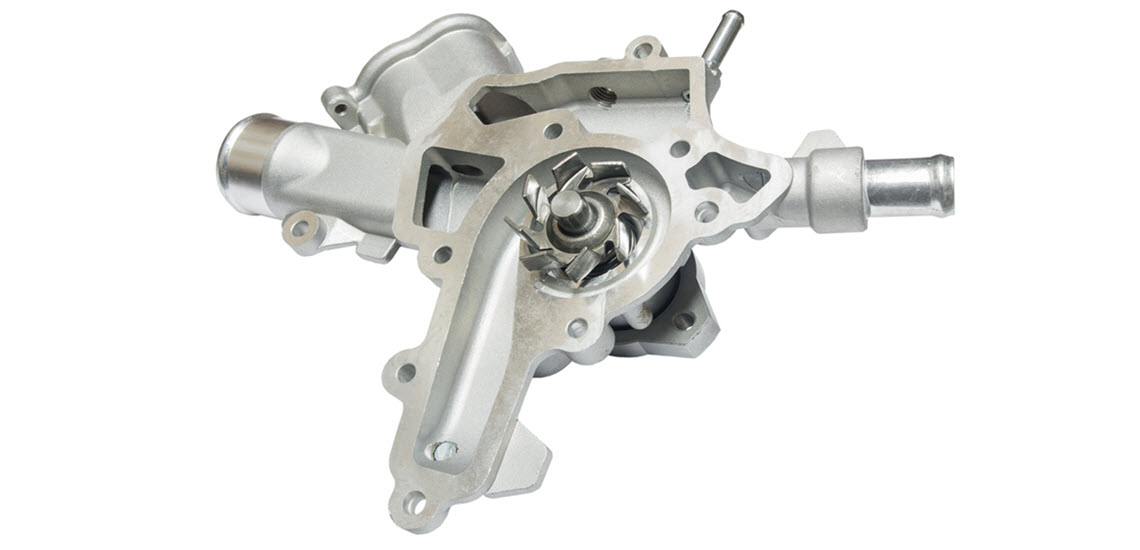
Coolant is vital to the proper functioning of your car’s engine. Otherwise, your car can overheat, which is a dangerous and potentially costly situation that can cause lasting damage to your car. The water pump is critical in helping the coolant get where it needs to go. A water pump that is failing or wearing out can cause total engine failure.
One easy-to-spot indicator that your water pump may be struggling is if you notice coolant leaking from the front of your car. If you are regularly seeing a wet patch underneath the vehicle after it has been parked for a while—this leakage is often greenish in color—it is best to get your vehicle checked out by a dealer or authorized service center before the problem can worsen.
When you look under the hood, you may also spot rust developing around the pump. Over time, this can cause the pump to corrode. Similarly, if your engine is overheating or steam is coming out of the radiator, stop driving immediately as to not do further damage to the car. When the water pump totally fails, coolant will stop circulating around the engine the way it should.
Another possible sign of a failing water pump is a high-pitched whining noise coming from the front of the car. This can be indicative of a loose water pump pulley, meaning that the bearings inside the pump are beginning to fail.
What to Do if You Suspect Your Water Pump is Failing
If your water pump needs to be replaced, it is best to visit an experienced mechanic. The ideal situation is to keep your car on a regular, recommended maintenance schedule that will enable you to catch potential malfunctions before they occur.
Typically, water pumps last 60,000 to 90,000 miles. Often water pumps are replaced alongside the timing belt, which is located in front of the pump and is built to last about the same amount of time.
Unfortunately, sometimes water pumps can fail suddenly without warning signs. The best way to make sure your water pump is well taken care of is to use a manufacturer-recommended coolant and stay vigilant when looking for warning signs. Check under your hood to inspect the water pump and surrounding area occasionally, and be aware of any leakage or of a car that is starting to run warmer than usual. However, the best thing to do if you suspect your water pump is beginning to fail is to take your Jaguar in to a licensed service center to be checked out by professionals.
How Glenwood Foreign Car Can Help
Glenwood Foreign Car has been servicing the areas  of Upper Makefield Township, Yardley, Newtown, and Morrisville, PA since 1977. We specialize in foreign car repair, and are here to help you with your Audi, Mercedes Benz, Volvo, BMW, Acura, Infiniti, Nissan, Lexus, or Toyota. We have qualified service technicians on staff who are ready and waiting to offer their assistance.
Glenwood Foreign Car offers a wide range of services, from standard maintenance like oil changes and tune-ups to more extensive repairs, like replacing a failing water pump. To help you keep up with your busy schedule when your car is in the shop, we even offer loaner vehicles, so you don’t have to sit around and wait while we do our work. Call or stop by today to make an appointment for us to check out your Jaguar!
* Jaguar F-Pace image credit goes to: teddyleung.
]]>